
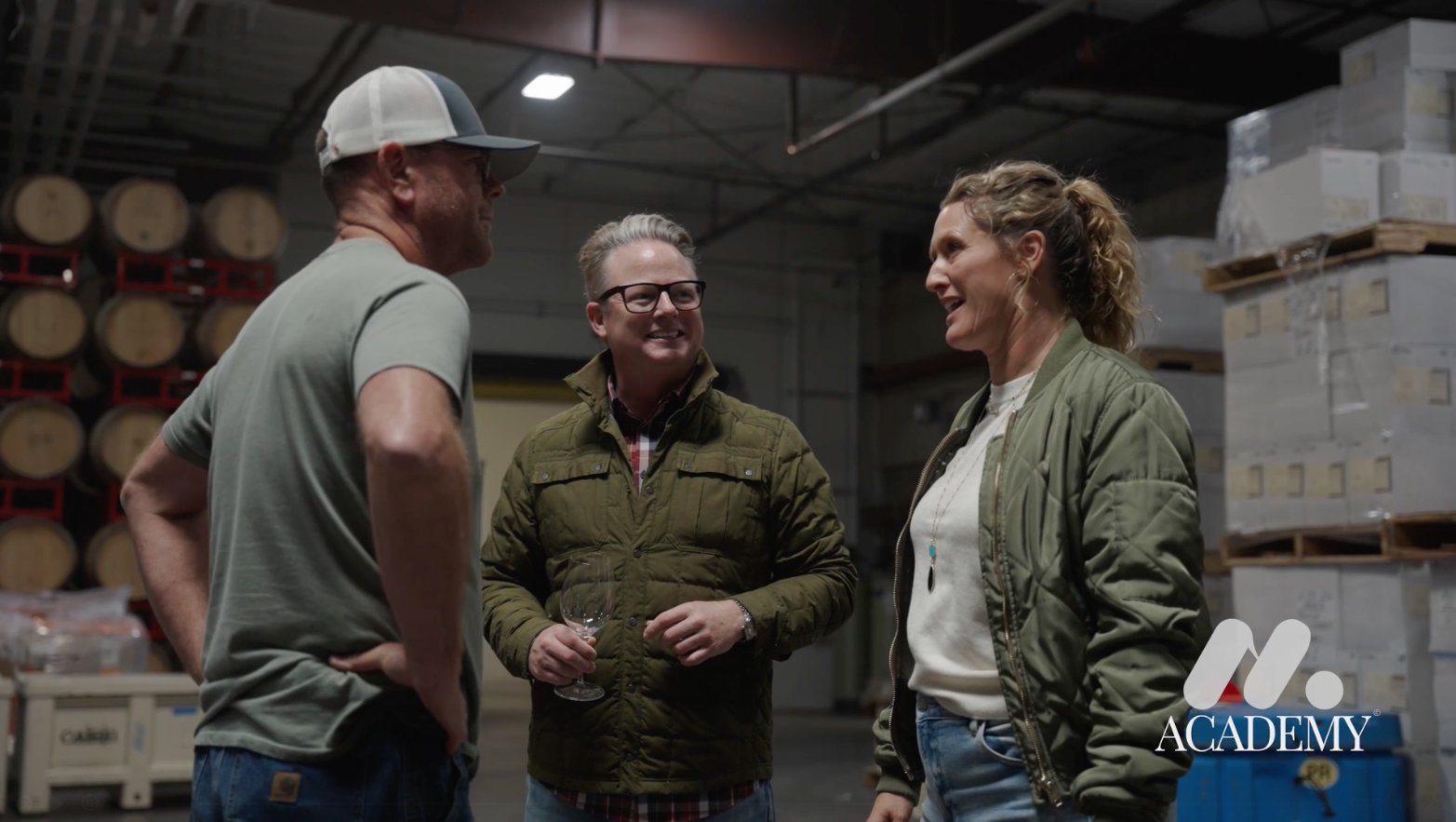
Q & A with the Founders
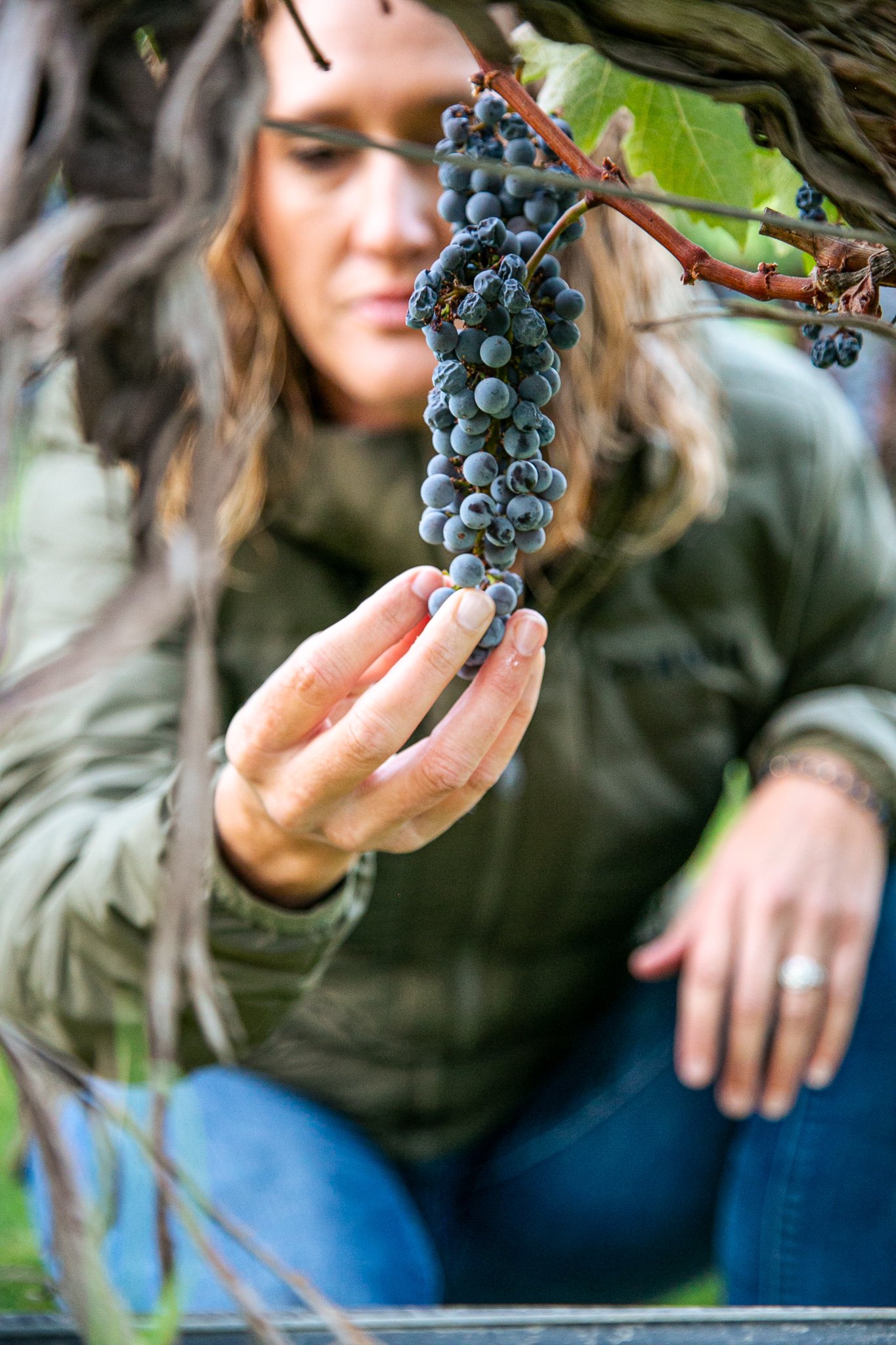
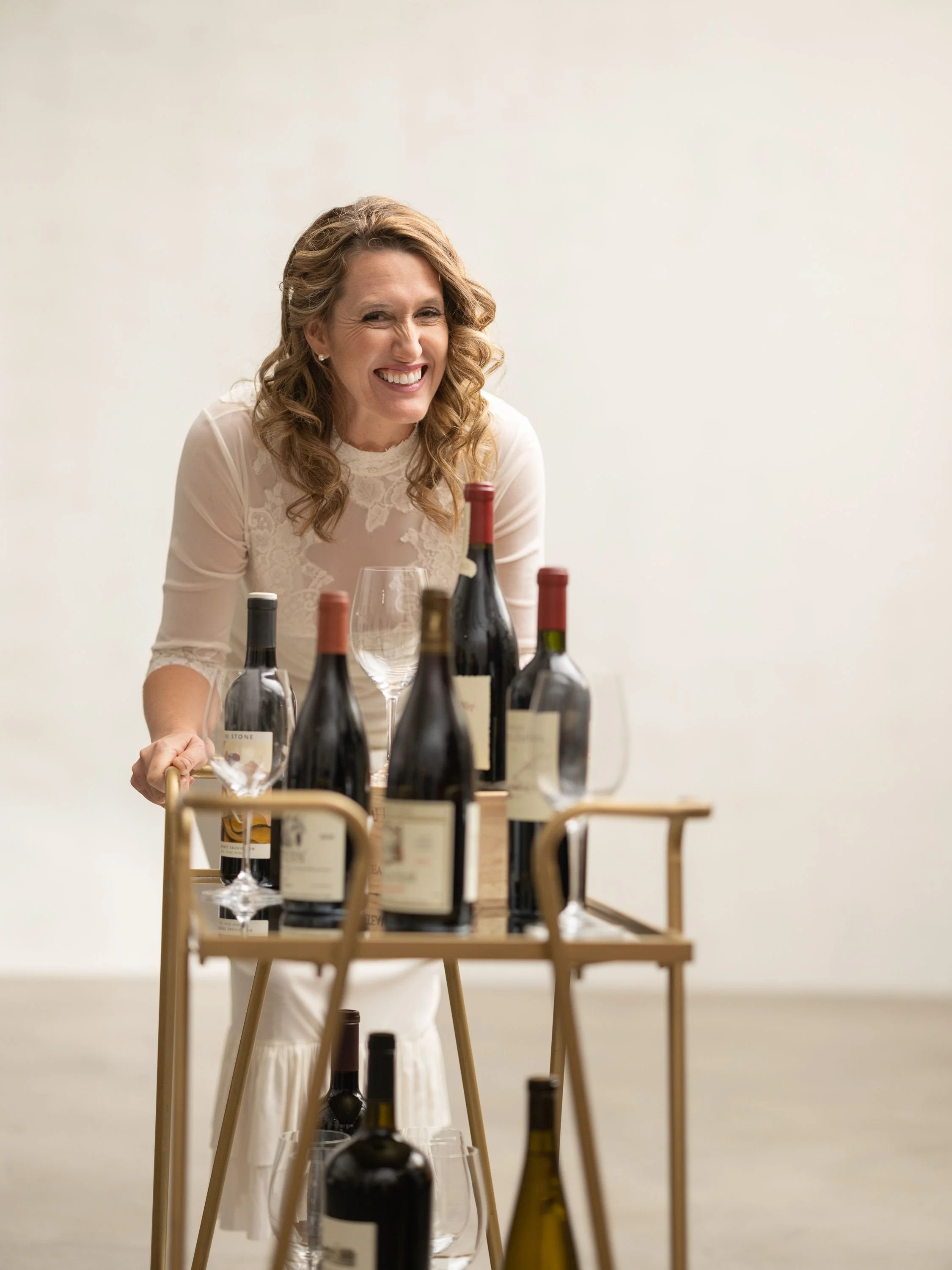
Amanda W. Higgins
Founder & Instructor

What was the initial impetus for starting M. Learning Academy?
M. Learning Academy is a vision I’ve been developing for the past four years. I wanted to create a learning system that working professionals could actually use, one that delivers high-quality, science-based business insights at an accessible cost, on an anytime, anywhere platform.
It is truly built by professionals, for professionals. The content reflects real-world experience. These are lessons you only gain by making mistakes, solving problems, and moving forward.
We built the platform we wished existed: practical, accessible, and grounded in real experience.
My passion for the wine community is rooted in helping people reach their goals faster. As mentorship disappears in many companies, we’re giving people a way to level up on their own.
How does M. Learning Academy differ from other industry education platforms?
We are deeply focused on the business mechanics of the wine and craft spirits industry. Our approach is to collaborate with highly specialized experts—the best in their respective fields—and translate their knowledge into a structured, highly digestible learning format.
Our resources, which include study guides, visual frameworks, quizzes, writing prompts, and downloadable toolkits are designed to reinforce real understanding, not just surface-level knowledge.
We don’t just share information, we structure it so professionals can actually apply it.
Equally important, the platform is built for flexibility. There are no classrooms or rigid schedules. You engage with the material when it works for you. This is education designed for the reality of how people work today.
What do you personally bring to M. Learning Academy as a founder and instructor?
My role is to bridge the gap between world-class expertise and the professionals who need it most. This platform is exactly what I wish I had while building my own companies.
I bring over 15 years of hands-on operating experience, having scaled a brand from zero to nearly 100,000 cases in national distribution. That includes opening all 50 markets, managing distributor relationships, developing SKUs and packaging, and overseeing hospitality and events.
I’ve built brands from the ground up, so everything we teach is rooted in real execution.
Having worked as an ambassador for an emerging region, I understand what it takes to create something from nothing. That experience drives a mindset of innovation, resilience, and finding unconventional paths to success.
What should prospective students know about the inaugural course, Mastering the Wholesale Channel?
This course delivers a level of depth that will fundamentally change how you understand the supplier and wholesaler relationship.
The value is significant because this type of knowledge is rarely accessible. It typically exists behind closed doors within private networks. This is the playbook that’s usually learned the hard way, or not at all.
Whether you are building your wholesale business, training a team, or trying to better navigate distribution, this course is designed to give you practical, actionable clarity.
How does M. Learning Academy relate to your leadership development work through Dream Big Darling and DRIVE?
For over a decade, my work has focused on helping emerging leaders and business owners overcome challenges and grow. I founded Dream Big Darling to support the next generation of women in wine and spirits through mentorship and access.
M. Learning Academy expands that mission at scale.
M. Learning Academy allows us to take mentorship beyond one-to-one and make it accessible to anyone, anywhere.
This work is deeply personal to me. Coming from an agricultural background, I understand that many rural communities lack access to the kind of business education found in major distribution hubs.
By equipping producers and professionals with the tools to succeed, we’re helping sustain family businesses and preserve generational legacies.
If we can help a family keep their land and their business for another generation, that’s the impact that matters.
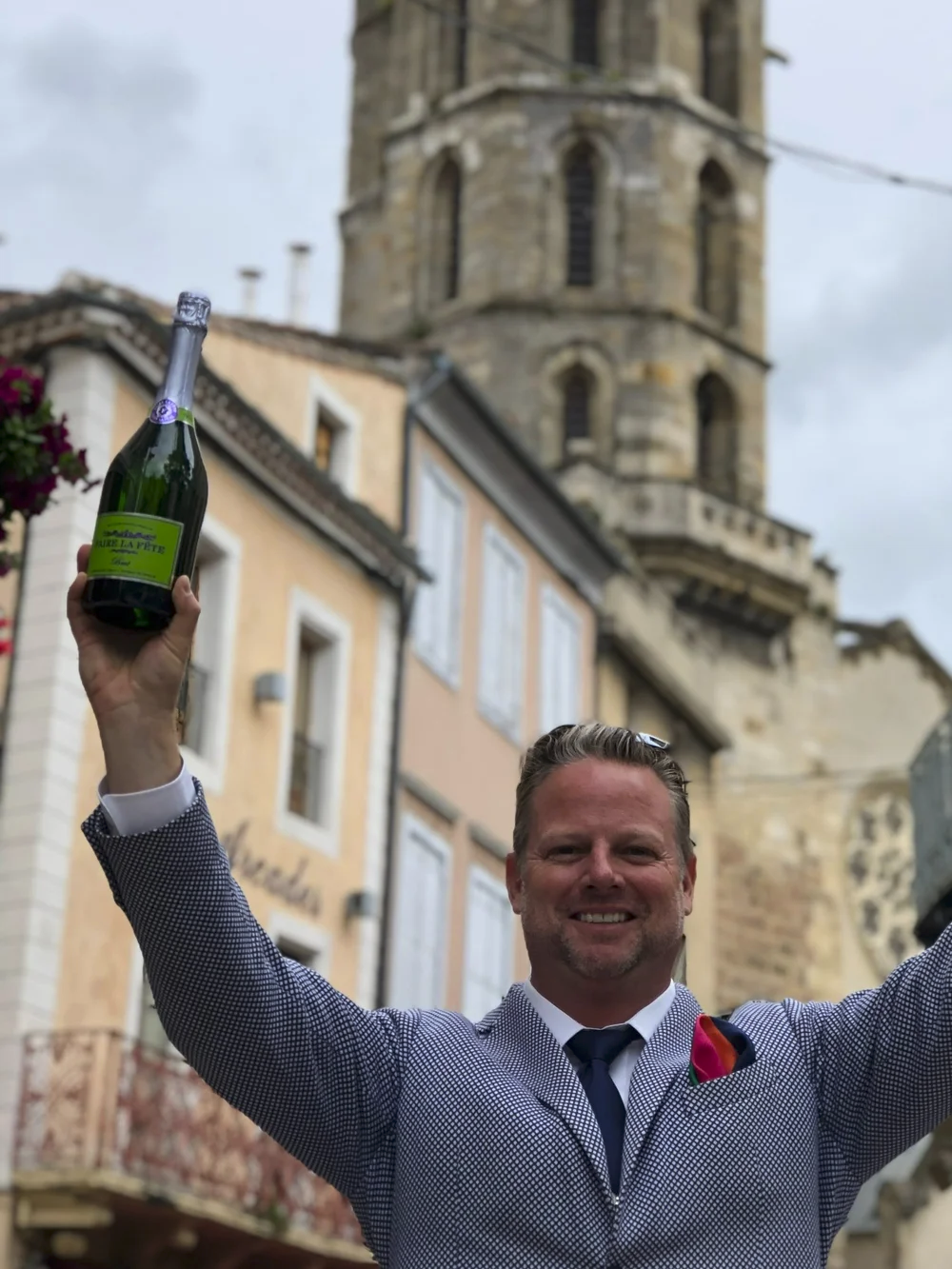
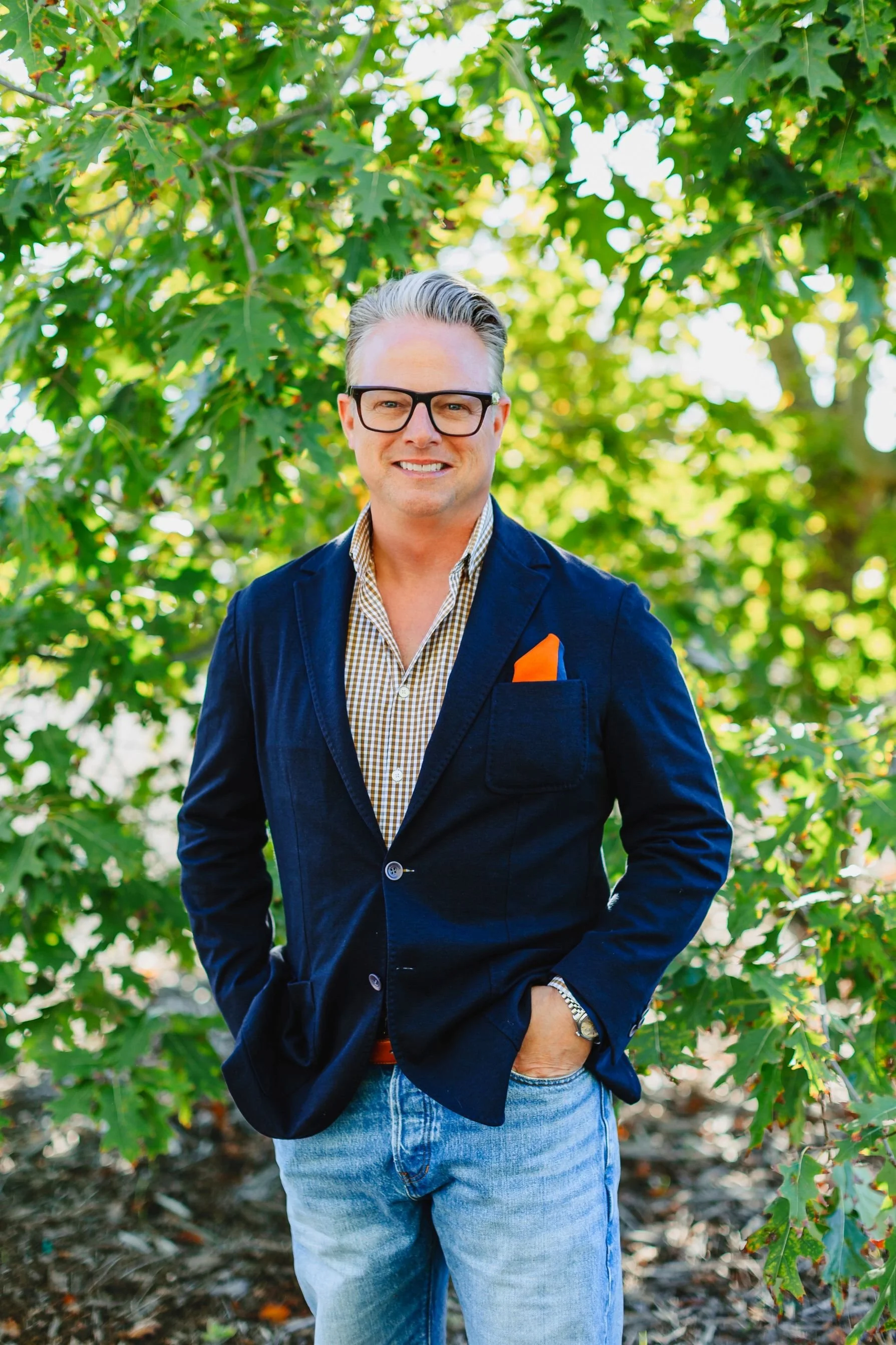
Peter Baedeker
Founder & Instructor
How did you and Amanda come together to form M. Learning Academy?
We’ve been friends for years, but came together to form M. Learning Academy in 2025 during a period of major disruption in the U.S. distribution landscape, including RNDC’s wind down in California. Having led a large distributor and built brands on the supplier side, I could see the level of uncertainty across the market.
Amanda and I share a passion for education and mentoring. We both saw a clear gap. The industry lacks practical, experience-based business education at a time when operators need it most. Periods of disruption expose where education is missing. Right now, the beverage industry needs practical business training more than ever.
How does M. Learning Academy differ from other industry education platforms?
Most platforms focus on product knowledge, which is important. Others offer general business education while some offer graduate degrees with a wine business focus. What differs with M. Academy is our courses are based on real-world business challenges and taught by operators who have built brands, managed distributors, and dealt with business growth or turnaround.
M. Learning Academy is not classic wine education. These are business courses built and taught by operators who have led beverage businesses at scale, including distributors and suppliers.
We are not teaching theory. We are teaching how the business actually runs.
What do you personally bring to M. Learning Academy as a founder and instructor?
I bring perspective from the distributor, producer and supplier sides of the business. I started in wholesale and worked up to president of a major distributor, then moved into brand building and supplier leadership.
That combination shapes how I teach. The focus is always on decisions that drive real results. Growth, profitability, and execution in the market.
Students will not just learn concepts. They will learn how to act on them. My goal is simple: teach what actually drives growth and profitability in the real world.
What should prospective students know about the first course, Mastering the Wholesale Channel?
Wholesale is the most misunderstood part of the business, especially for suppliers. That’s exactly why we built this course.
I spent the first half of my career inside distribution. It was not until I moved to the supplier side that I realized how large the education gap really is.
This course is designed to close that gap. Whether you are early in your career or leading a brand, you will gain practical tools to grow and manage a business in the three-tier system.
Students will leave more organized, more confident, and better equipped to drive profitable growth.
For emerging domestic wine brands, why even bother with wholesale given the complexity of the three-tier system?
Because the math does not support a purely DTC model at scale.
For most premium wineries, once you move beyond roughly 5,000 cases, wholesale becomes essential.
The average DTC customer purchases about one 9-liter case per year. At scale, that means selling 15,000 cases DTC would require on the order of 10,000 to 15,000 active customers purchasing annually, depending on buying behavior.
The math gets very real, very quickly: DTC scale requires a massive, highly engaged customer base.
While some customers purchase more and others less, the broader challenge is maintaining that level of active demand year after year. Customer acquisition, retention, and engagement at that scale are both costly and operationally intensive.
DTC is incredibly powerful, but it’s not infinitely scalable on its own.
That’s why, as premium wineries grow, the channel mix naturally shifts toward wholesale to support broader distribution and sustainable volume, and brand recognition and a sustained customer journey.
DTC is also becoming more competitive. Consumers expect more, and brick and mortar retailers are increasingly competing for those same customers through online ordering and delivery options as well as improved product offerings on their shelves. Allocating wines and shipping direct to the customer’s door is no longer a strategic advantage for an emerging wine brand.
The most successful brands do not treat DTC and wholesale as separate strategies. They treat them as an ecosystem that supports overall growth.